Building a Defensible Paper Retention Schedule That Fits Your Industry
Industry-Specific Paper Retention Schedules
Most businesses have their fair share of contracts, invoices, HR files, client agreements, and tax records, whether in paper or digital form. The trick is knowing how long to keep them. Hold onto documents too long, and you create security risks. Destroy them too soon, and you invite compliance violations. A smart paper retention schedule keeps you out of both traps. Learn how to create a schedule based on your industry that your staff will follow.
What Is a Defensible Retention Schedule?
A paper retention schedule is a written, consistently followed plan that explains how long you keep each type of document and when you destroy it. “Defensible” means you can justify your decisions to regulators, auditors, or judges. You can show that your document retention practices are based on legal requirements and applied consistently across your organization.
A document retention and destruction policy is no longer optional. Without a defensible plan, you face the following risks:
- Fines and penalties for destroying required records too soon
- Increased legal exposure from keeping damaging documents too long
- Higher storage costs and cluttered offices
- Confusion among employees about what to keep or shred
Steps to Building a Defensible Paper Retention Schedule
Map Your Current Paper Trail
Start by identifying every type of paper record your organization creates or receives to establish a baseline and highlight risk areas. Look at the following:
- Financial records, such as invoices, tax documents, and payroll files
- Employee records, including applications, performance reviews, and benefits forms
- Client or patient files, such as contracts, intake forms, and service records
- Corporate records, including meeting minutes, bylaws, and policies
Ask department heads what they keep and why. Document where records are stored and who controls them. You might discover duplicate files or unofficial systems during this step.
Know Your Industry’s Rules
Retention requirements vary widely by industry. Research federal, state, and industry-specific regulations that apply to your organization. Tax laws, employment regulations, healthcare rules, privacy standards, and contractual obligations often dictate minimum retention periods for paper records. A defensible retention schedule reflects all of these requirements.
Match Each Document Type to a Timeline
The next step is to assign specific retention periods. First, create a master list of document types. Then, define the following for each category:
- The official record owner
- The required retention period
- The trigger event for retention (termination of employment, contract expiration, etc.)
- The approved destruction method
Sync Paper and Digital Trails
Many organizations focus on paper retention but forget to account for digital copies. To increase consistency and reduce risk, your document retention policy should address both physical and electronic records. If you keep a scanned copy on your computer, make sure the retention period matches that of the original paper record.
Account for Special Situations
Audits, lawsuits, and government investigations change the rules. When you receive notice of litigation or an audit, you must preserve relevant documents, even if your normal retention period has expired. This is called a legal hold.
Courts closely examine how organizations handle document preservation in these special situations. To protect yourself from accusations of improper destruction, your policy should include a clear process for:
- Identifying when a hold applies
- Notifying employees
- Suspending normal destruction timelines
- Releasing the hold when the matter ends
Don’t Forget Secure Destruction
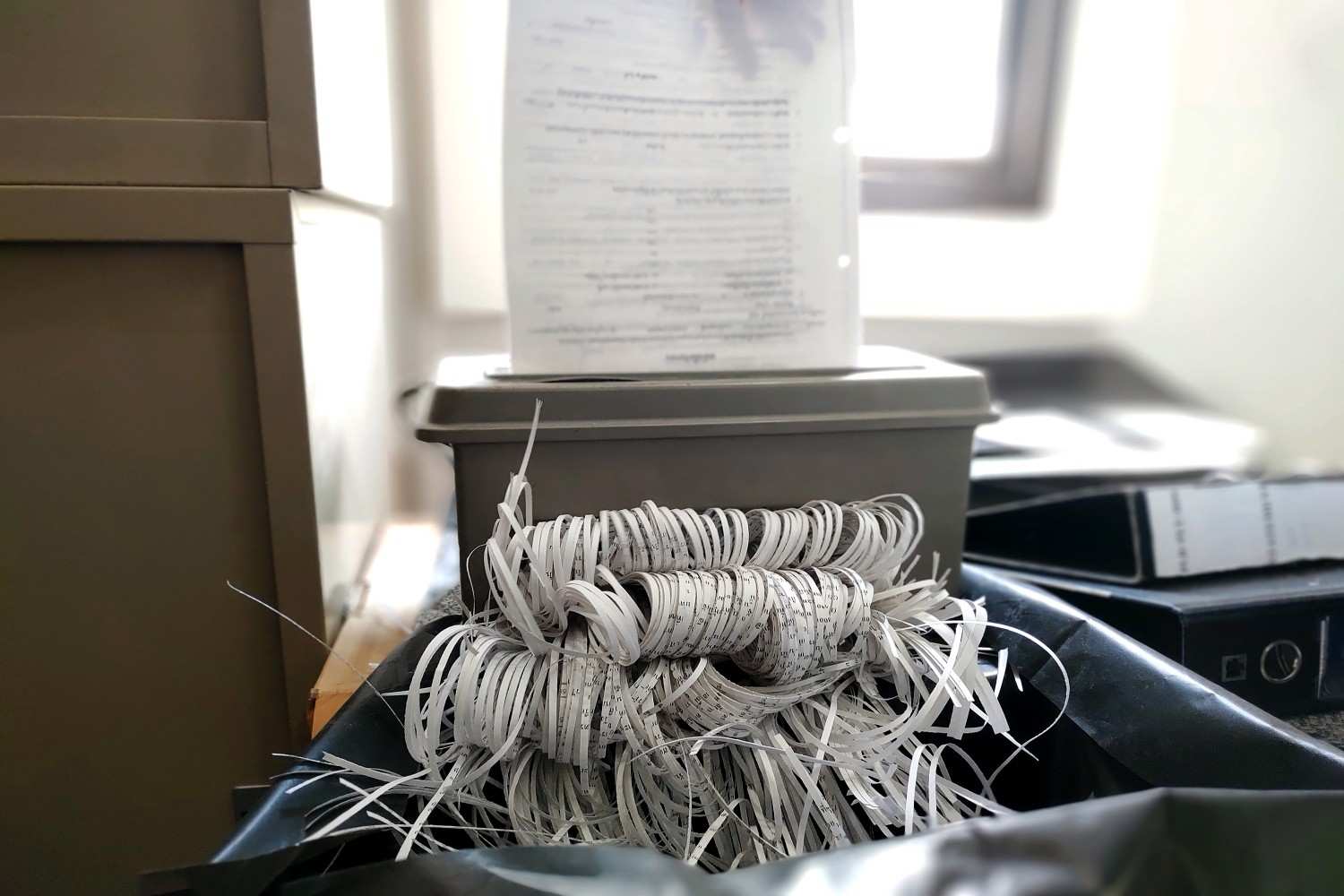
This is where many schedules fall apart. A paper retention schedule is only defensible if you follow through with secure document destruction. Tossing old files in a dumpster is not secure. It’s a data breach waiting to happen.
Your document destruction policy should specify:
- Approved shredding methods
- Who is authorized to approve destruction
- How destruction is documented
- How certificates of destruction are stored
Secure shredding closes the gap. It protects confidential information, reduces the risk of data breaches and identity theft, lowers document storage costs, and helps your organization comply with federal and state regulations dictating the disposal of sensitive information.
Automate What You Can
Manual tracking takes up valuable time and invites mistakes. Consider the following automation tools to simplify retention and make your efforts more consistent:
- Document management software that tracks retention periods
- Automated alerts for upcoming destruction dates
- Barcoding systems for stored paper records
- Scheduled shredding services
Automation doesn’t replace oversight, but it reduces human error and creates documentation that supports your retention schedule. As a result, compliance becomes part of your everyday workflow instead of a once-a-year scramble.
Take Control of Your Paper Retention Strategy
Document Shredding & Storage can serve as the secure final step in your defensible paper retention schedule. Our services reduce legal risk, lower storage costs, and better protect confidential information. We have over 20 years of experience serving business owners and individuals in Lubbock, Amarillo, Midland, and Odessa, TX. We remain locally owned in an industry where large shredding companies have taken over, with a focus on fast response times, accurate invoicing, and great customer service. Contact us today for help maintaining a document retention and destruction policy you can stand behind.
FAQs About Paper Retention Schedules
How often should we review our paper retention schedule?
We recommend reviewing your schedule once a year or whenever laws or regulations affecting your industry change. Regular reviews keep your document retention practices aligned with current requirements.
Can you provide a certificate of destruction after shredding?
Yes. DSS provides certificates of destruction documenting the date and shredding method used. This serves as confirmation that your paper records were securely destroyed in accordance with your policy.
Do we need different retention schedules for different departments?
Most organizations use one master document retention policy with department-specific exceptions. This maintains consistency in the overall standard while addressing unique record types.
What happens if we accidentally keep documents beyond our schedule?
If you discover outdated documents in your archives, arrange secure destruction promptly to correct the error and reduce legal and privacy risks. Update your retention schedule if needed to prevent future oversight.
Can you help us implement ongoing shredding as part of our retention plan?
Certainly. Schedule ongoing shredding at whatever frequency you need, whether that’s multiple times a week or every few months. We can either pick up your collection bins for secure shredding at our facility or destroy them on-site in a shred truck—it’s up to you.